A five-minute walk to find leading lines
A line can invite the eye into a photograph or lead it out. Find out which with three photographs on a short walk.
Read the guidePractical guides to framing what’s in front of you.
Take an idea outside. See what changes.
A line can invite the eye into a photograph or lead it out. Find out which with three photographs on a short walk.
Read the guideSimple ways to capture the light, details and everyday moments you want to remember.
You cannot move the sun, and at home you should not move the lamp either. Change where you stand instead, and six frames will teach you more than six objects.
A distant mountain is not small in the photo because the phone is wide: distance divides its angle, focal length multiplies it. Only one of the two is free to change.
Vertical lines stay straight only while the back of the phone is parallel to the wall. Tilt up to include the roofline and the top of the frame narrows.
The sky is still lit and the ground is not. That gap decides your photograph before any setting does.
A bright corner can compete with your subject. Inspect the border, change one thing and check what context you lose.
A ratio is a decision about edges. Crop one photo three ways and you stop guessing which format to shoot in.
The middle of the frame is the safest place and often the least interesting. Here is how to tell which one your photograph needs.
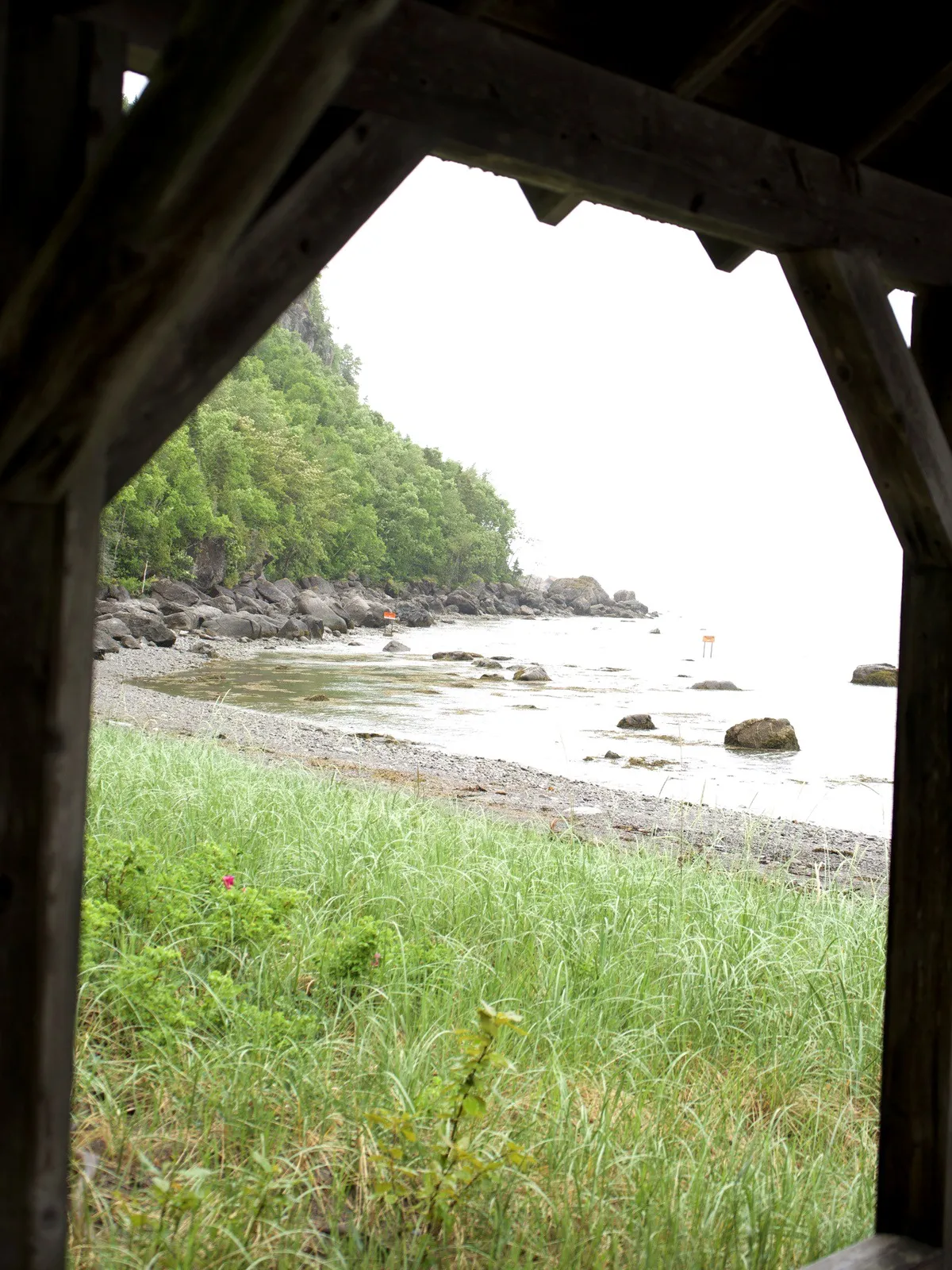
A doorway can give a view depth. The useful question is how much of it deserves to stay in the photograph.
Give the sky room when it has something to say. Give the ground room when the story is at your feet.
The grid gives you somewhere to start. The useful part is deciding what belongs in the space around your subject.
A path, a table edge, a bend in a stream. Look at where the line starts, and what is waiting at the other end.
Before you fill the frame, look at what the quiet part of the photograph is doing. Sometimes the water matters as much as the leaf.