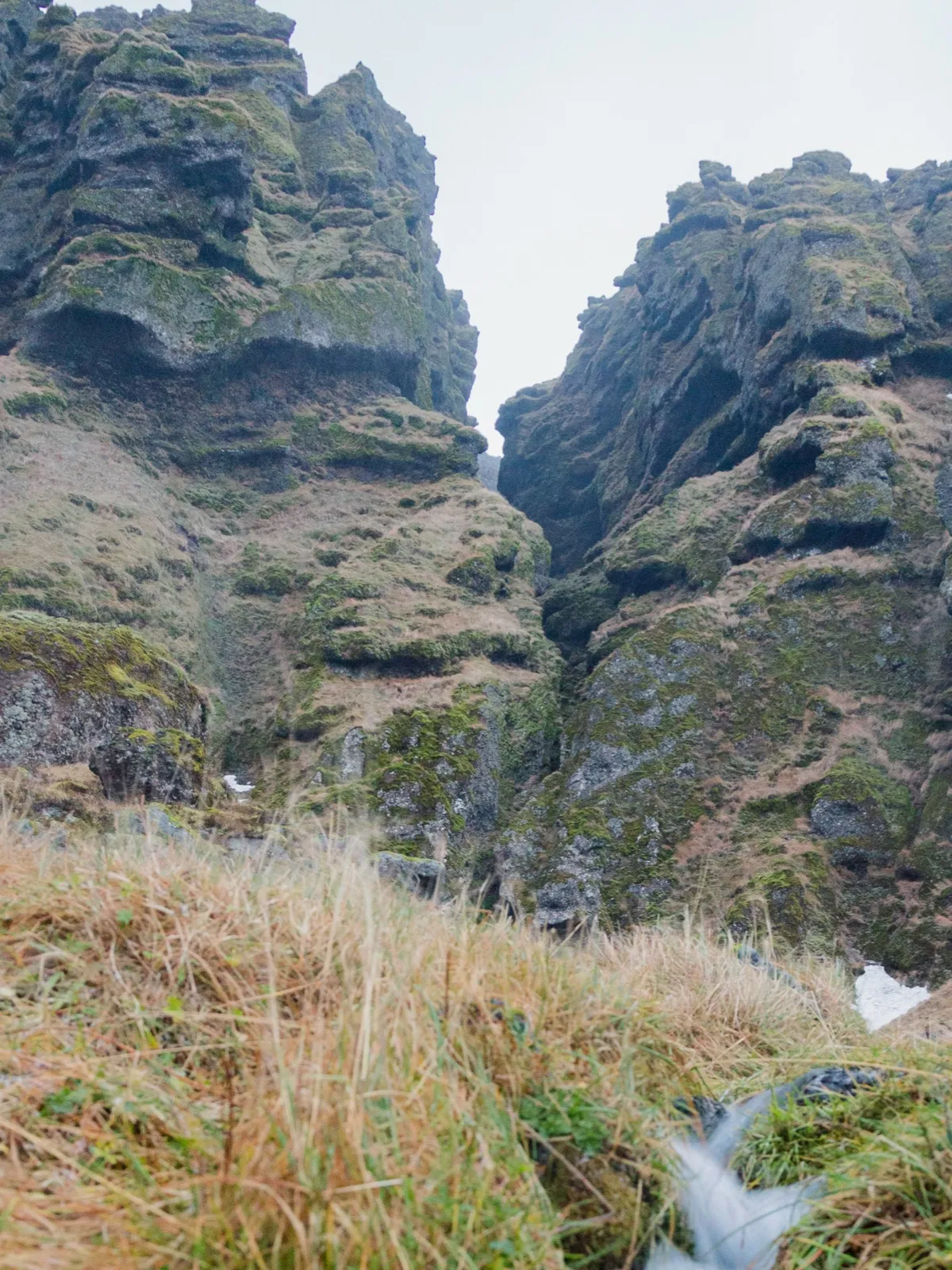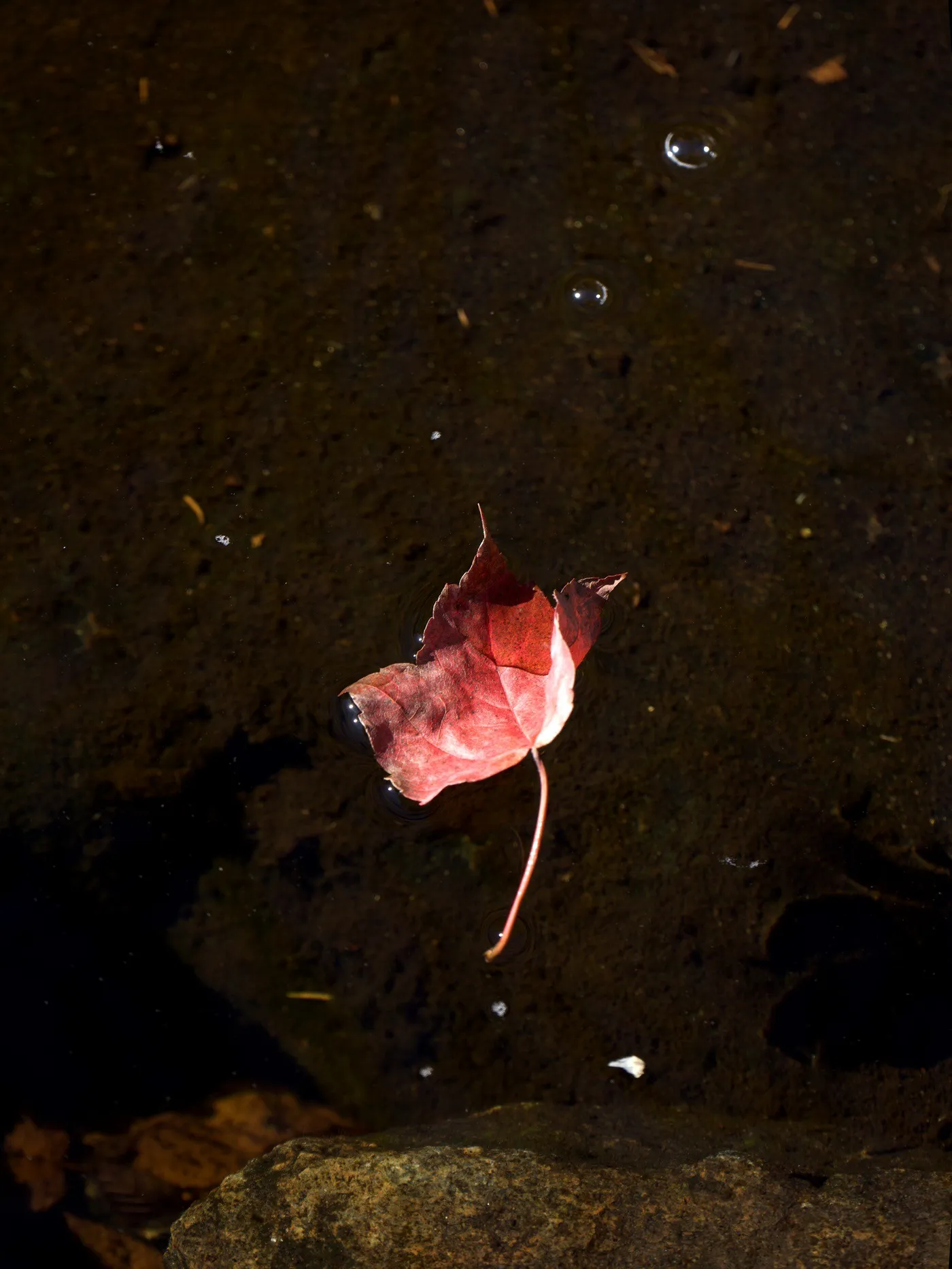
Use a doorway, window or overhanging branch as a frame when it helps the viewer find the subject beyond it. Include enough of the nearby structure to make the opening clear, then check that it leaves the subject room. A frame that hides the interesting part of the view is doing too much.
You do not need a perfect rectangle. Two sides and a top, an arch or a single branch can suggest an opening. What matters is the relationship between that near edge and what you want us to see through it.
Look through the wooden opening
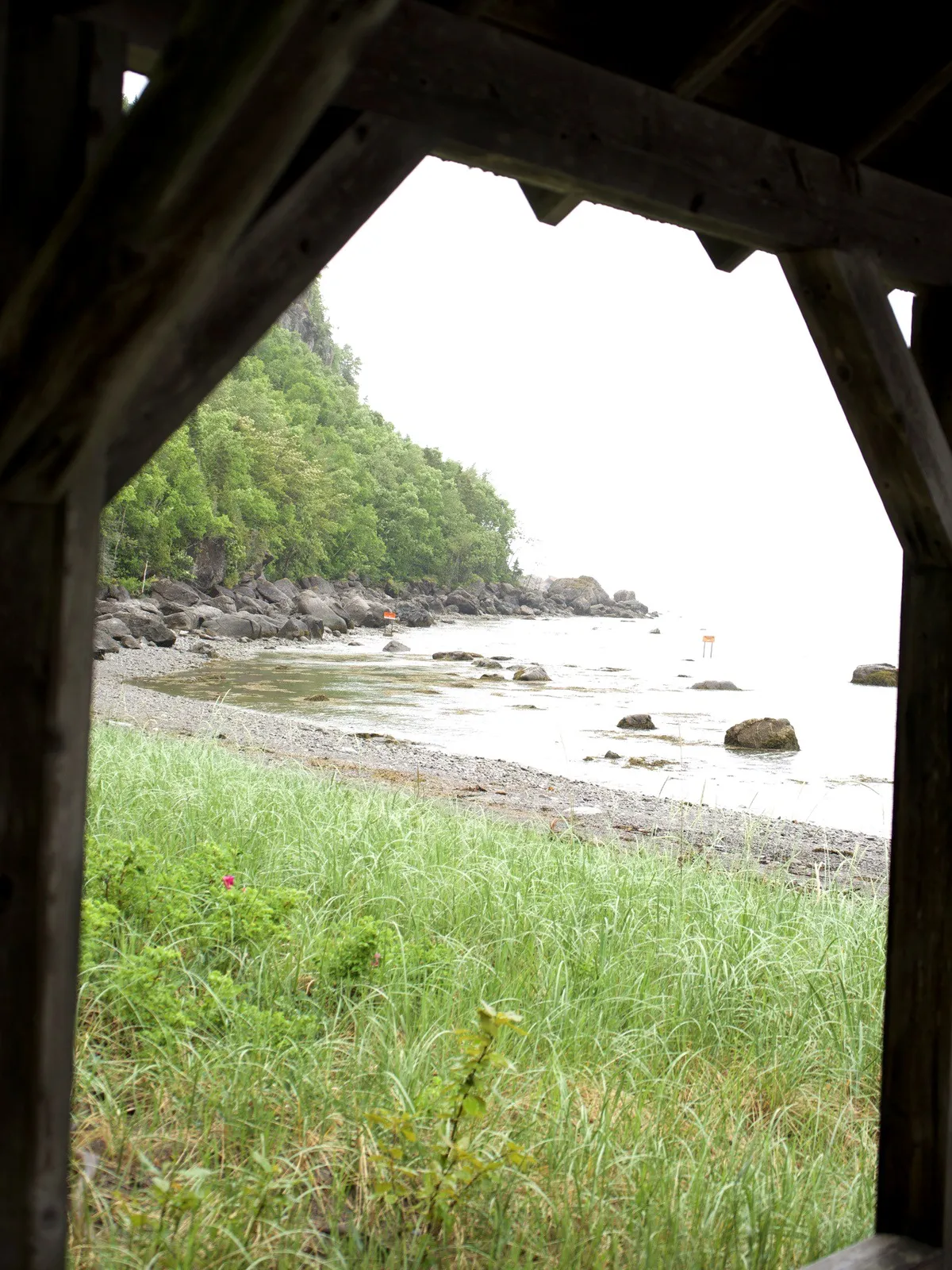
In the photograph above, dark posts run down both sides and angled beams cross the top. Beyond them, grass leads to a rocky shore and bright water. The timber makes the viewing position part of the photograph: we are looking out from somewhere, rather than seeing an isolated stretch of coast.
The contrast also has a cost. The large dark shapes attract attention, while the bright sky and water contain little visible detail. Keeping more timber would strengthen the sense of shelter but leave less space for the shoreline. Cropping it all away would open up the coast and remove that sense of looking through an opening.
Neither choice is automatically better. Decide whether the photograph is about the view alone or the feeling of seeing it from this spot.
Choose the subject before choosing the frame
A doorway is easy to notice, so it is easy to photograph the doorway and forget what is inside it. Name the subject first: a tree across the garden, a plate on a table, a person by a window or a product on a shelf.
Then move until the opening gives that subject a clear space. Watch for a doorpost touching a face, a branch crossing a label or a window edge slicing into a plate. A small sideways move can separate those edges. Zooming from the same spot changes the crop, but it does not change which objects overlap.
In the shoreline example, follow the tree-covered bank toward the rocks. Those shapes need to remain readable inside the wooden opening. You can compare that route with the examples in our leading-lines guide.
Keep only the border you need
Start with a little of the structure on two or three sides. Check the image at thumbnail size: do you see the subject first, or a heavy dark border?
If the border takes over, try a safe step forward or a slightly different angle. If the opening stops being recognizable, bring a little more of it back. There is no required percentage of frame to keep.
A partial frame can work especially well when the scene needs breathing room. An open side lets the eye travel into the photograph instead of enclosing everything. Our negative-space guide offers another way to think about that room.
Focus on what is beyond the opening
When using Apple's Camera app, tap the subject in the viewfinder to set the focus area. Drag the exposure control beside it up or down to adjust brightness. Apple documents both actions in its camera tools guide.
Look at the bright view and the shaded border before taking the shot. You can let the border stay dark if its shape is enough. Raising the brightness to reveal every beam may make a pale sky less useful; lowering it may leave the subject too dark. If neither version shows what matters, try another viewpoint or different light.
The foreground frame does not have to be sharp. It does need to remain recognizable enough to help the picture.
Try three versions of one view
Find an accessible doorway or window with something interesting beyond it. Use the same zoom for all three photographs:
- Include the opening generously, so the surrounding structure is obvious.
- Move a little closer and keep only the edges that help the subject.
- Photograph the view with the opening outside the image, if you can do so from a safe position.
Compare the photographs small, then enlarge your favourite. Does the frame add depth or context? Does it cover a detail you wanted to keep? Does the unframed version say the same thing more clearly?
In BULB, the Frame within a frame guide gives you a placement to try over the live camera view. Use it to find an opening, then adjust for the actual scene. If the border contributes nothing, leave it out.